Diana’s Bodyguard Shatters Decades-Old Myths About Fatal Night
In a shocking revelation, the bodyguard of Princess Diana, Trevor Rees-Jones, who was the sole survivor of the tragic car crash in Paris in 1997, recently appeared on live television to share details about that fateful night. For decades, Rees-Jones has been believed to have suffered amnesia from the accident, leaving a void in the understanding of what truly happened. However, during the interview, he claimed that his memory was never impaired and provided startling new insights, including the fact that Princess Diana was wearing a seatbelt at the time of the crash.
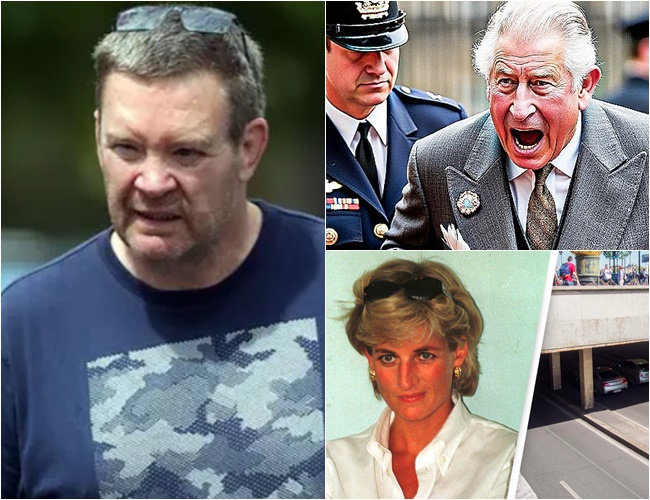
This revelation has sparked a storm of media attention and reopened questions about the events leading to Diana’s untimely death. Rees-Jones stated that the widely accepted belief that he lost his memory due to severe injuries was a misrepresentation. “I never claimed to have amnesia,” he said firmly, adding that he had been pressured into silence for years. This statement alone has sent shockwaves through royal watchers and conspiracy theorists alike, as his silence has long been interpreted as a lack of memory.
One of the most critical details from Rees-Jones’ account is his assertion that Diana was indeed wearing her seatbelt during the ride. This directly contradicts the official narrative, which has repeatedly stated that Diana and Dodi Fayed were not buckled in, contributing to the severity of their injuries. According to Rees-Jones, Diana took precautions before the car departed the Ritz Hotel in Paris, even expressing concerns about the paparazzi’s aggressive pursuit.
Rees-Jones also provided a detailed timeline of the events that unfolded that evening. He recalled that Henri Paul, the driver of the car, appeared confident but had consumed alcohol earlier in the night. The bodyguard admitted he felt uneasy about Paul’s condition but was reassured by his employer, Dodi Fayed. He described the moments before the crash as chaotic, with photographers swarming the car and Paul accelerating rapidly to evade them.
The bodyguard’s testimony has reignited calls for further investigation into the circumstances surrounding the crash. Critics have long questioned the thoroughness of the initial inquiries, and this new information could provide the basis for reopening the case. While some experts remain skeptical, others believe Rees-Jones’ statements may finally shed light on the lingering mysteries surrounding the tragedy.
The interview has also sparked emotional responses from Diana’s supporters and royal commentators. Many see Rees-Jones’ account as an attempt to honor Diana’s legacy by providing the truth. However, skeptics argue that his claims come too late to be fully verified.
The royal family has yet to respond to these new revelations, but the public’s interest in Princess Diana’s story remains as strong as ever. Rees-Jones’ decision to speak out may reignite debates about the royal institution’s role in protecting—or failing to protect—its members.
As the world reflects on the loss of the People’s Princess, the bodyguard’s shocking revelations have added yet another layer of intrigue to an event that has haunted the collective memory for over two decades. For many, the truth about Diana’s final hours remains elusive, but this latest testimony may bring us closer than ever to understanding what really happened on that tragic night.